


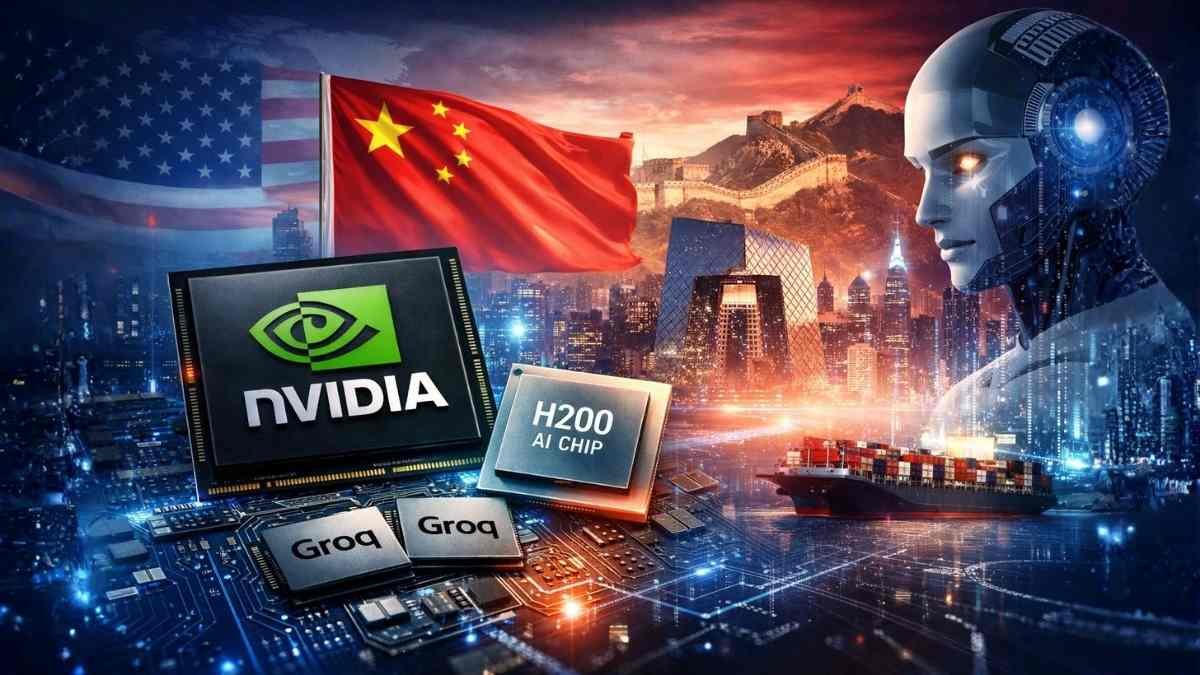
NVIDIA Gets China Approval for H200 AI Chips
By Staff Reporter | March 18, 2026
SAN FRANCISCO/BEIJING: U.S. chip giant Nvidia has secured a crucial regulatory green light from Beijing to sell its H200 artificial intelligence (AI) chips in China, while simultaneously preparing a modified version of Groq-based AI chips for the Chinese market, according to sources familiar with the matter.
The development marks a significant turning point for Nvidia, which has faced months of regulatory hurdles amid escalating U.S.-China technology tensions.
Beijing approval unlocks stalled sales
Chinese authorities have granted approval for Nvidia to supply its H200 chips to multiple customers in China, clearing a major bottleneck that had previously blocked shipments despite U.S. export licenses.
The H200—based on Nvidia’s Hopper architecture—had been caught in regulatory limbo, requiring permissions from both Washington and Beijing. With approvals now in place, Nvidia has resumed production and begun fulfilling orders from Chinese firms.
Chief Executive Jensen Huang confirmed that the company’s supply chain is “getting fired up,” signaling a restart after production was previously halted due to uncertainty.
China has historically been a key market for Nvidia, accounting for roughly 13% of its revenue before restrictions disrupted sales.
LATEST NEWS — >>> Samsung AMD Sign AI Memory Deal
Strong demand from Chinese tech firms
The approval comes amid robust demand from major Chinese technology companies, including firms such as Alibaba, ByteDance, and Tencent, which have already placed orders or received preliminary clearances.
Industry estimates suggest the Chinese AI chip market could be worth tens of billions of dollars, making it strategically vital for Nvidia’s global growth ambitions.
NVIDIA adapts Groq chips for China
Alongside the H200 rollout, Nvidia is preparing a version of AI chips based on technology licensed from startup Groq for sale in China.
These chips will focus on AI inference—the process of running trained AI models to generate outputs such as text, code, or predictions—where Nvidia faces increasing competition from Chinese firms like Baidu.
Sources say the Groq-based chips are not downgraded but are being adapted for compatibility with Chinese systems. The new variant is expected to become available as early as May.
Strategic balancing amid geopolitical tensions
NVIDIA’s dual approach—resuming H200 sales while customizing new products—highlights its effort to maintain a foothold in China despite tightening U.S. export controls and Beijing’s push for domestic semiconductor development.
While Nvidia dominates AI training chips globally, the inference segment is becoming increasingly competitive, especially in China, where local players are rapidly advancing.
Outlook
The latest approvals could revive a critical revenue stream for Nvidia, though uncertainty remains due to evolving geopolitical dynamics and regulatory oversight on both sides.
Still, the move underscores a broader reality: even amid strategic rivalry, the global AI supply chain remains deeply interconnected—and too valuable for either side to fully disengage.














Leave a comment