


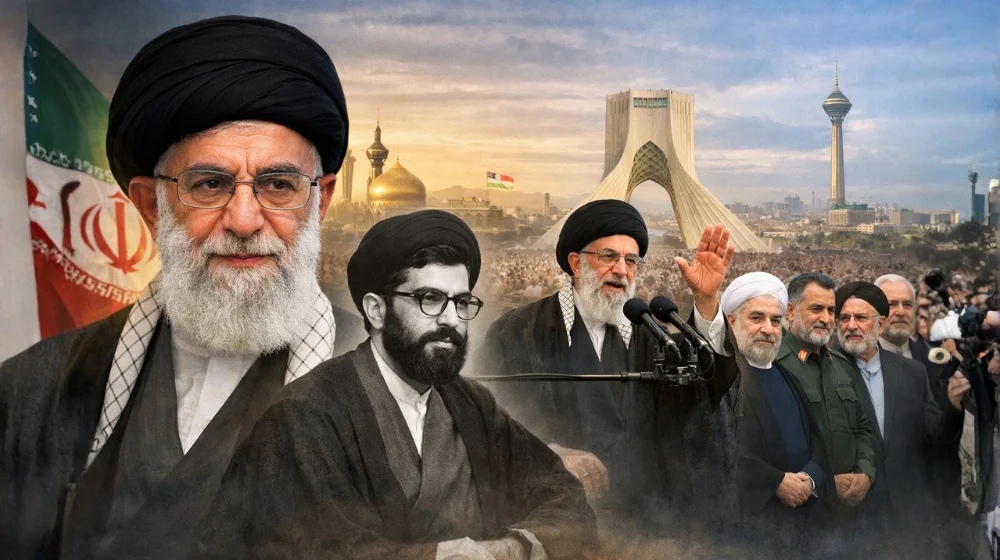
Ali Khamenei
Early Life and Education
Ali Hosseini Khamenei was born on April 19, 1939, in Mashhad, Iran. He came from a religious family; his father, Javad Khamenei, was a respected cleric. From a young age, Khamenei pursued Islamic studies, attending religious seminaries in Mashhad and later in Qom, which was (and remains) a major center of Shia scholarship.
In Qom, he studied under prominent scholars, including Ruhollah Khomeini, whose revolutionary ideas deeply influenced him. Khamenei became involved in political activism during the 1960s, opposing the rule of Shah Mohammad Reza Pahlavi.
Role in the Iranian Revolution
During the 1970s, Khamenei was arrested multiple times by the Shah’s security forces due to his revolutionary activities. He played a significant role in spreading Khomeini’s messages and organizing opposition against the monarchy.
The Iranian Revolution of 1979 led to the overthrow of the Shah and the establishment of the Islamic Republic of Iran. After the revolution, Khamenei quickly rose within the new political structure.
Presidency (1981–1989)
In 1981, after the assassination of President Mohammad-Ali Rajai, Khamenei was elected as the third President of Iran. His presidency coincided with the intense years of the Iran-Iraq War.
During this period, Iran faced significant economic challenges, political consolidation, and international isolation. Although the presidency held executive authority, ultimate power rested with Supreme Leader Ruhollah Khomeini.
Becoming Supreme Leader
After Khomeini died in 1989, the Assembly of Experts selected Ali Khamenei as the new Supreme Leader of Iran. His appointment marked a major turning point, as he assumed the highest authority in the country.
As Supreme Leader, Khamenei holds control over:
-
The armed forces
-
The judiciary
-
State broadcasting
-
Key political appointments
-
Major policy directions
He works closely with institutions such as the Islamic Revolutionary Guard Corps (IRGC), which plays a central role in Iran’s military and political structure.
Political Views and Influence
Khamenei is known for:
-
Strong support of Iran’s Islamic governance system (Velayat-e Faqih)
-
Opposition to Western political influence, particularly from the United States
-
Support for regional allies and groups aligned with Iranian interests
-
Emphasis on self-reliance and resistance to international sanctions
Under his leadership, Iran has expanded its regional influence while also facing international sanctions over its nuclear program and regional policies.
Domestic and International Impact
Domestically, Khamenei has overseen decades of political stability within the Islamic Republic’s framework, though Iran has experienced periodic protests and political tensions.
Internationally, his leadership has shaped Iran’s relationships with global powers, neighboring countries, and international organizations. Iran’s nuclear negotiations, regional strategy, and defense policies are ultimately guided by his office.
Personal Life
Ali Khamenei is married and has six children. He is also known for his interest in poetry and literature and has authored and translated several religious and political works.
Legacy
Ali Khamenei is one of the longest-serving heads of state in the Middle East. Since 1989, he has remained the central figure in Iranian politics, shaping the country’s ideological direction, governance structure, and foreign policy strategy.
His legacy continues to influence Iran’s domestic policies and its role on the global stage.












Leave a comment