


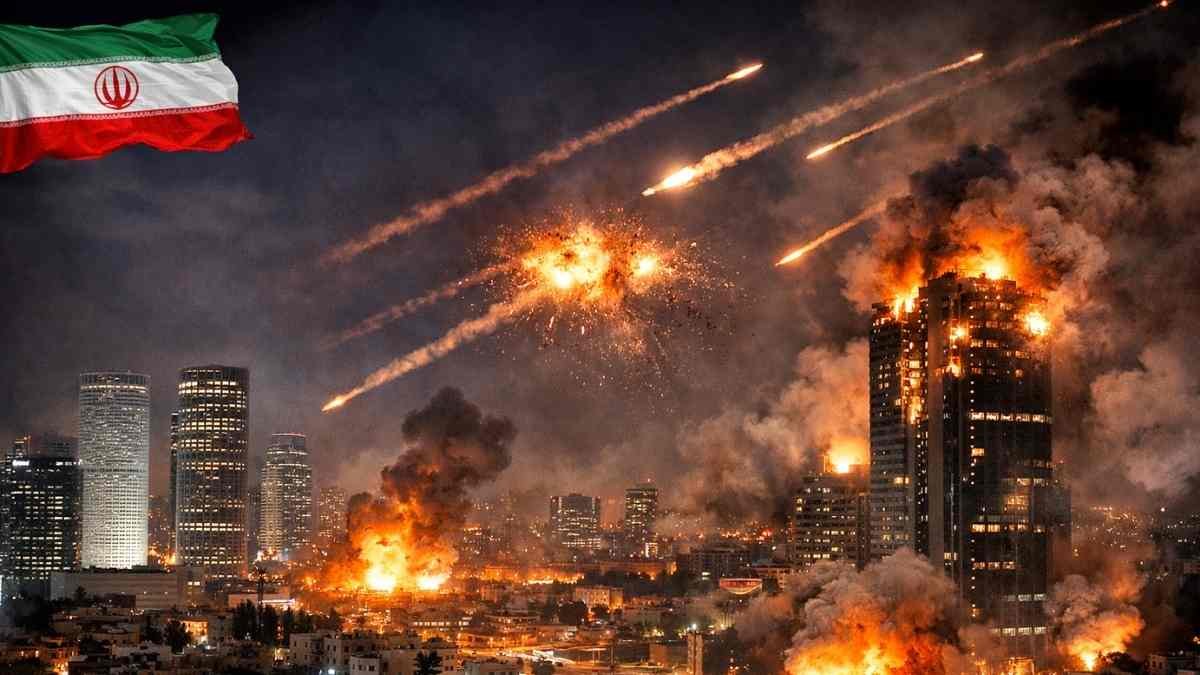
Iran Strikes Tel Aviv
By Staff Reporter | March 18, 2026
Tehran/Tel Aviv: Iran launched a wave of missile strikes targeting Tel Aviv in what it described as a “decisive retaliation” following the killing of its top security official, Ali Larijani, in an Israeli airstrike, marking a dangerous escalation in the ongoing regional conflict.
According to multiple reports, Iranian forces fired missiles—some reportedly carrying cluster warheads—towards Israel’s commercial hub overnight. The strikes killed at least two people and caused damage in areas near densely populated neighborhoods and strategic installations.
Iranian state media said the attack was a direct response to the assassination of Larijani, who served as secretary of Iran’s Supreme National Security Council and was considered one of the most powerful figures in the country.
Background: Killing of Iran’s Security Chief
Larijani was killed earlier this week in a targeted Israeli airstrike near Tehran, alongside members of his family and close aides. His death represents one of the most significant blows to Iran’s leadership structure in the current conflict.
Israeli officials described the strike as part of a broader campaign aimed at dismantling Iran’s military and political leadership. At the same time, Tehran condemned it as an act of aggression and vowed retaliation.
LATEST NEWS — >>> Meteor Explosion Startles Cleveland Residents with Loud Boom
Iran’s Response
Iran’s military leadership had earlier warned of a “decisive and regrettable” response. Within hours, missiles were launched not only at Tel Aviv but also toward other regional targets, including U.S. bases in the Gulf, some of which were intercepted by regional defense systems.
Iranian officials emphasized that the country’s political system remains stable despite the loss of key leaders and signaled that further retaliatory actions could follow.
Rising Regional Tensions
The latest exchange has intensified fears of a broader war in the Middle East. The conflict has already led to thousands of casualties, disruptions in global oil supply routes, and heightened geopolitical tensions involving the United States and its allies.
Analysts warn that continued tit-for-tat strikes between Iran and Israel could trigger wider regional involvement, with potential global economic consequences.















Leave a comment